

I read a great article on the value of self-choice when reading books. Unfortunately, I’m not able to find that article at the moment. Still, the author makes the point that when children and adults self-select their books they frequently run into a book that will change their life. I remember reading a book that changed my life.
After I graduated with my PhD, I had a good friend who liked to read the philosophy of Ludwig Wittgenstein. I found these books too difficult to read myself. So, my friend recommended that I read the American philosopher Norman Malcolm. I chose Malcolm’s book Thought and Knowledge.
In this book, Malcolm sets out Wittgenstein’s argument that thought is not equivalent to brain activity. The scientific hypothesis that thought is merely generated by brain activity is called “reductionism.” Malcolm sets forth a very cogent argument that thought is independent of the brain. Malcolm argues that the reductionist argument is not philosophically sound and is circular logic.
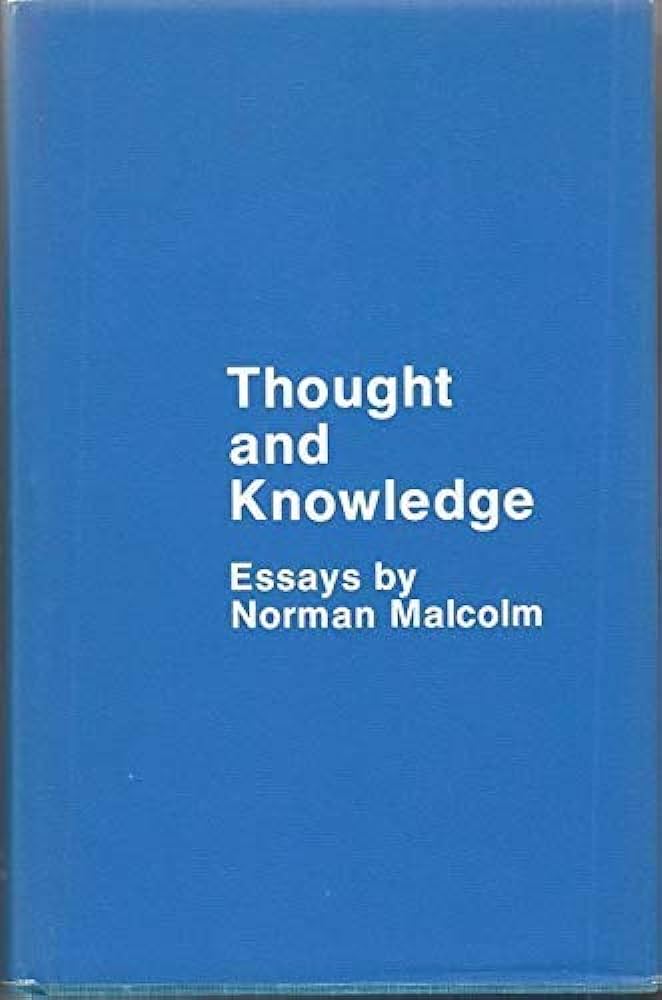
This argument literally made me drop the book while I sat stunned. As a trained psychologist, I had decided that the reductionist hypothesis was the only reality for human thought and existence. With surprise, I realized and said to myself, “If thought existed outside the brain, then human existence did not depend on our body alone.” This meant that I could entertain the hypothesis that thought could exist outside of the human body. In other words, we as humans have something that is called “the soul.” This soul can exist beyond the physical body since thought is not dependent upon the human body.
This then led me on a lifelong journey of reading scientific research about human consciousness and the possibilities of human existence beyond physical death.
I read scientific research. I wish to repeat that I read scientific research on the following topics: telepathy, remote viewing, near-death experience, mental healing, reincarnation, the impact of the mind on physical processes, and the impact of prayer on human affairs.
This lifelong reading has convinced me that thought is independent of the human brain. The brain is a switchboard or first responder between our extended mental capacities and the physical world. I am convinced that our consciousness or soul exists beyond bodily death. The scientific research is still inconclusive as to where our human consciousness goes after death. I prefer to entertain the Hindu belief that there are thousands of heavens. The Hindus believe one goes to the particular heaven which matches their personality. That is an intriguing hypothesis.
 James Nuttall, PhD